

In the first of what we hope to be a series of conversations with local Caerlaverock people, we set out to persuade Stephen Powell to be the first ‘subject’ of this series.
A few drinks at the Nith Hotel with good friends Rob Wells and Sue Greig (our tape recorder running in the background) convinced us that his stories of his life and the area would be of immense interest to many, and his style of story telling eminently entertaining!
Stephen remained the only one yet to be convinced, but bravely agreed to allow us to record some audio in the quieter location of the front room where he grew up, so that you can actually hear him tell his stories. A little like an ‘oral history’, we feel that it is important that these things don’t get lost in the mists of time.
Many thanks to Rob Wells for taking the plunge as interviewer!
Early years
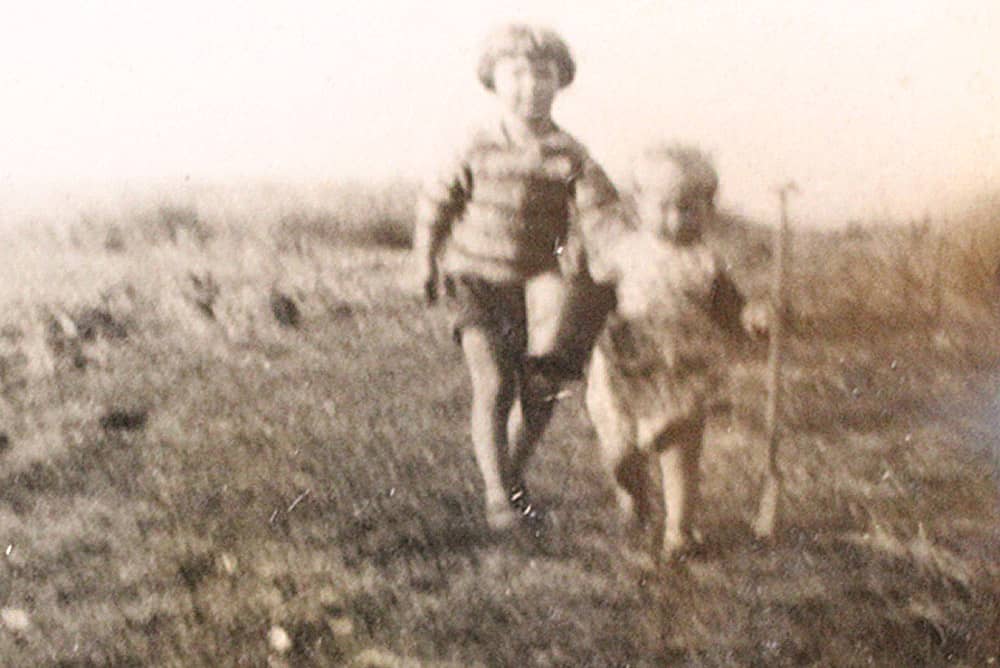 Stephen Powell first came to the small riverside village of Glencaple in Dumfries and Galloway with his mother, father and his big sister Elisabeth (with an ‘s’) in 1938, at the age of six. His father, Bill Powell, had a hut at Stanhope Farm (now derelict) near the Brow Well. Stephen’s father used the hut as a base from which to wildfowl. The hut burned down in 1938.
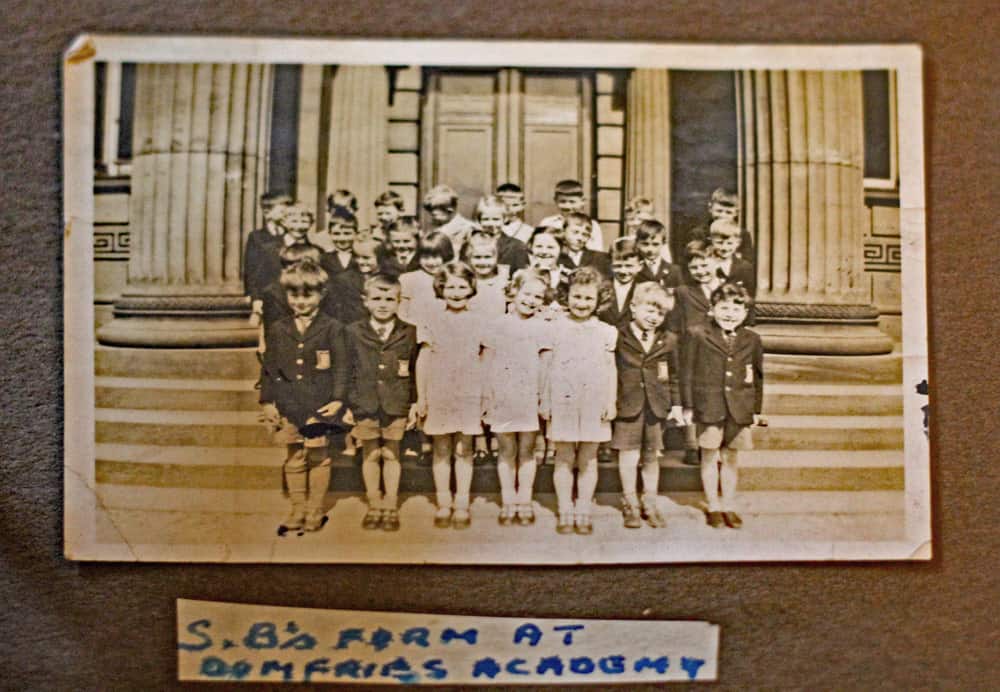
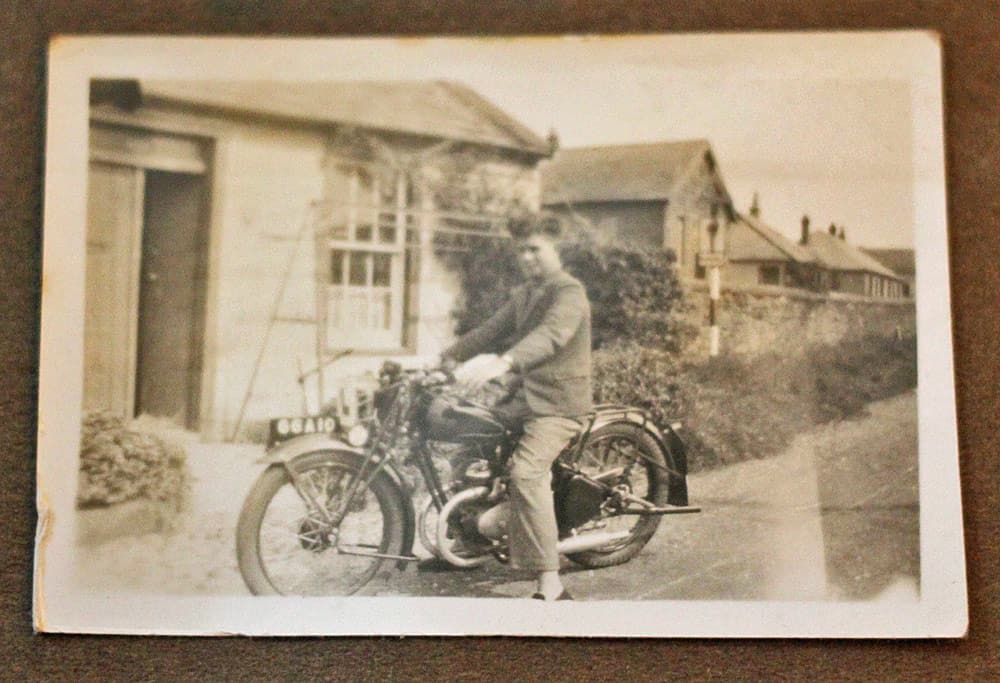
At the start of the war, in 1940, Stephen’s father worked for the Ministry of Aircraft Production in Glasgow. The house in Brampton had a large garden, too much for Mrs Powell to look after alone during the war. So in 1940, they came to live in the cottage on Church Street in Glencaple. Stephen returned here after retiring from his military career. Stephen is in the front row on the left – Arthur Jardine is on the right. Listen to Stephen talk about this photo by clicking the link below: Audio – Dumfries Academy photo Stephen attended Dumfries Academy until 1943 when, at the tender age of eleven, he went off to boarding school. Alone. On a train. He remembers with trepidation being crammed in to the carriage and having to navigate the two changes at Carlisle and Preston, en-route to Rossall School on the Lancashire coast. When the train came into Dumfries Station on his first journey to his new school, it was so packed, he says, that “you’d open the door and two people would fall out! Then they’d jam in and hold the door and you’d charge in, they’d slam the door and you’re in!”. “I don’t remember ever getting a seat. I did have a small suitcase, and as one was reasonably small oneself, so you just found room to sit on it… It was quite frightening actually.” We found out that opposite 3 Church Street, there was a tap on top of the drain [called a spigot]. It was there for those who had no water at home to come and collect their water. “I can remember the neighbour who had several children to look after, had no water in the house. I can see her carrying up either one or two buckets of water. If she was only carrying one bucket, her other arm was all stuck out to help keep her balance.” The rents were tied in those days and I think the rents were 3/6d [around 17½p]. We certainly had no central heating – it probably hadn’t been invented yet. You can see why these cottages weren’t developed because I think it cost about £30 or something to have this pipe put in with just the tap – that’s about 10 years rent!” Here’s Stephen telling us a bit about Glencaple ‘in those days’ (click on the link to hear the audio): Audio – Stephen Powell – Glencaple 1 Stephen on his Francis Barnett 125cc which cost £88 brand new If you’re interested to hear some more of Stephen’s school antics in his own words, click on the link below: Watch out for more from Stephen about Glencaple, the river Nith and Caerlaverock during the war. If you ‘Like’ our Facebook page, you will get the latest updates and articles to your personal news feed. 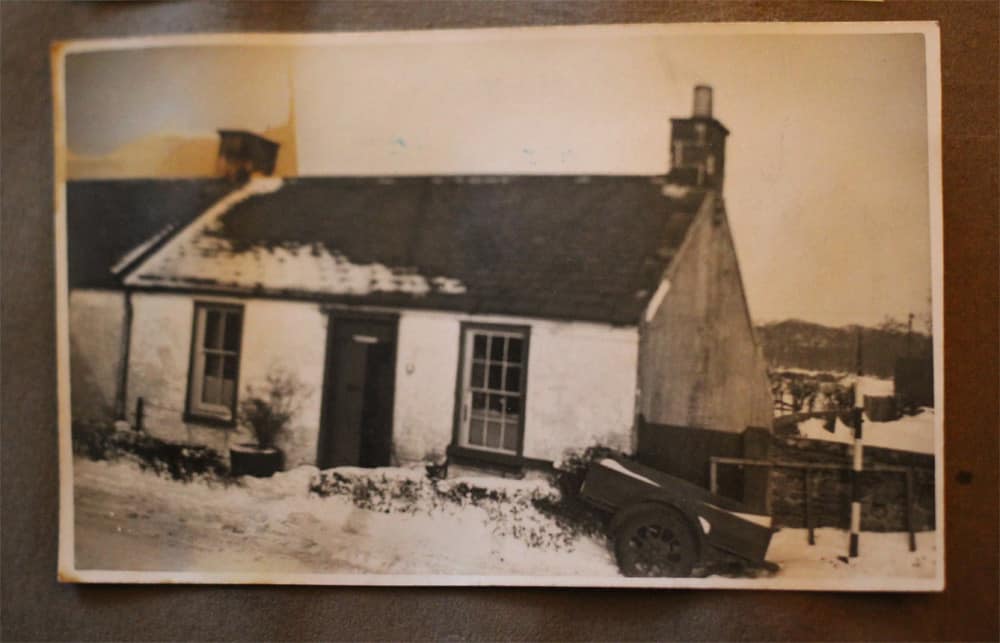 At the time, there were two cottages for sale on Church Street in Glencaple. Stephen’s first memories of Glencaple were of coming to look around them. There were no services, no electricity or running water, but Stephen’s father used them for wildfowling in 1938 and 1939. Stephen would come and visit at weekends with his mother, Joan Powell, from their home in Brampton, Cumbria where he was born and went to primary school.
Glencaple
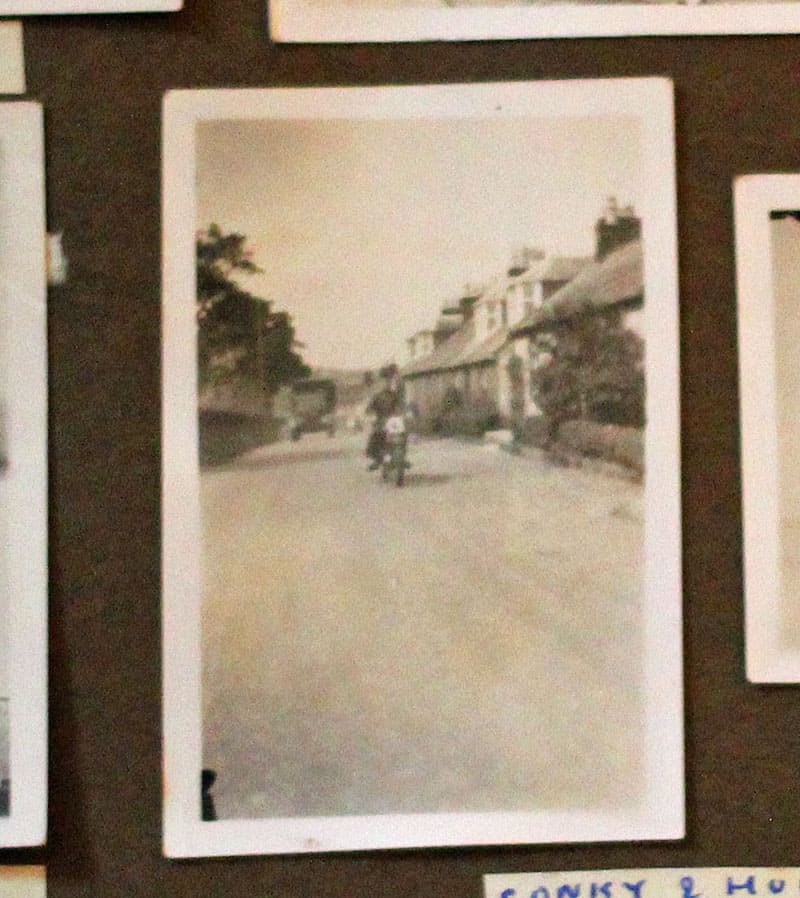 We were interested to find out what life was like in Glencaple when Stephen was a young boy…
 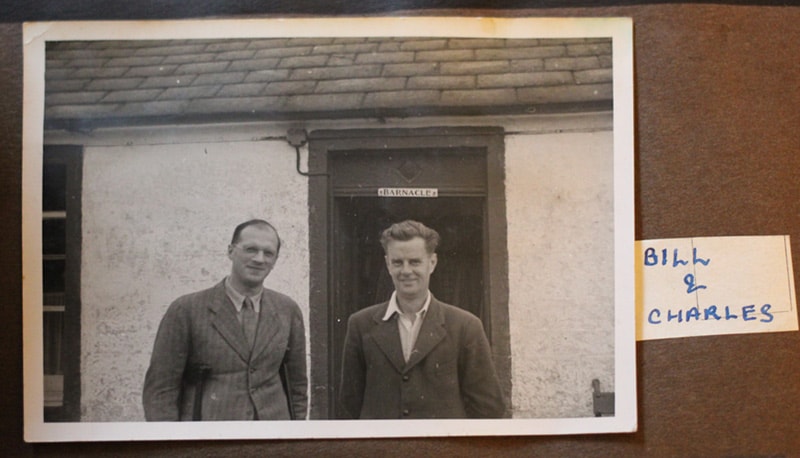 “My father bought the cottage next door. When he bought it, my mother, to save the neighbour having to carry the water up the hill, bullied my father into having a tap put in, which was quite illegal – you just joined it to the back garden and buried the pipe and put a tap in.
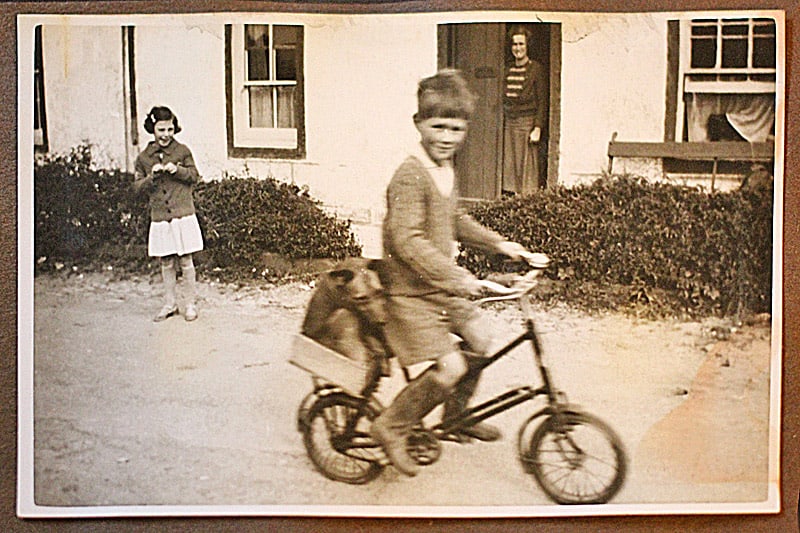
 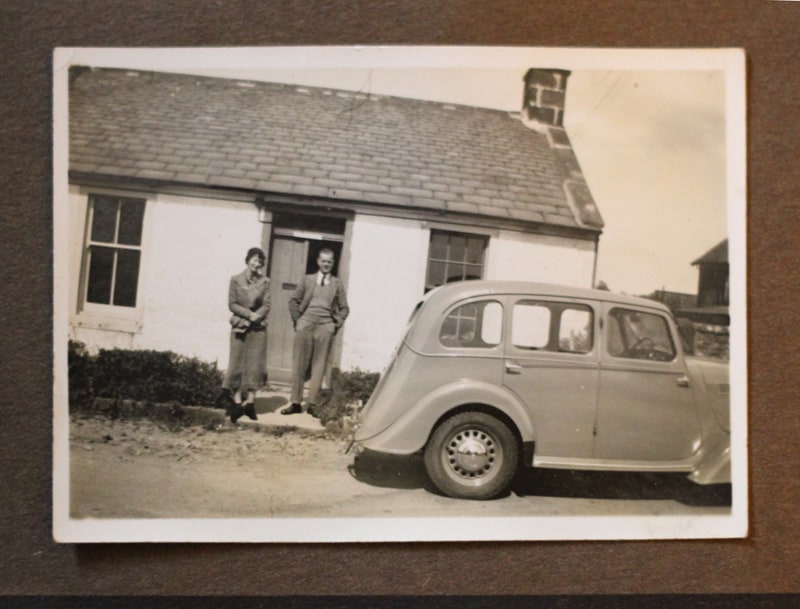 Uncle Frank and Auntie Mary in front of Stephen’s cottage with a Jowett
Audio – Stephen Powell – school days