
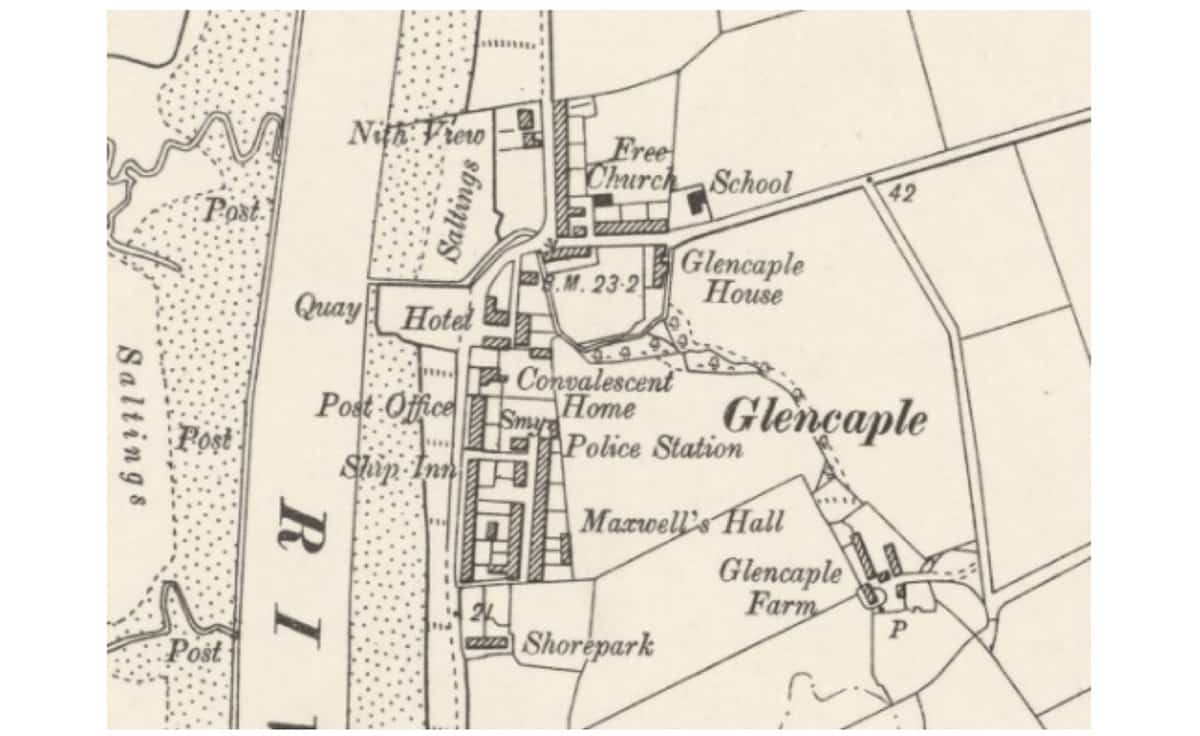
Many thanks to Joady Earle for forwarding this fascinating record of the research she has compiled of her house! We’re sure the information, maps and photographs will be of interest to us all in Glencaple and Caerlaverock!
Joady told us that she probably wouldn’t have started the whole thing ‘if Richard hadn’t been crawling in the roof space and found the cat that had been placed above the entrance!‘…
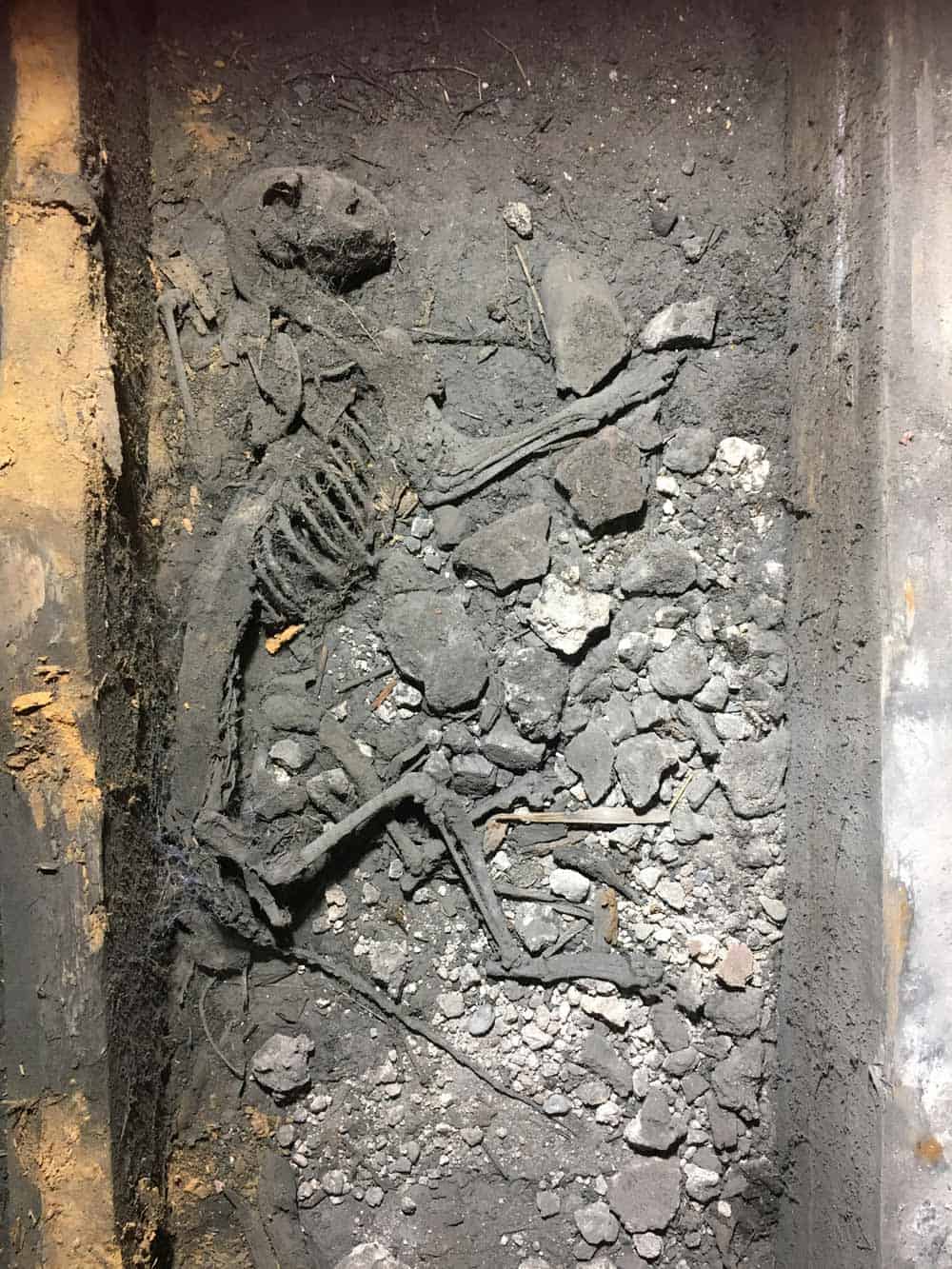
I decided to start investigating the history of the house for a number of reasons. We have a rowan tree outside the original front door and a cat was placed above the ginnel both for protection of the house. We had also been told the house had been built in 1840, the extension put on in 1880 and that it had been the Duke of Argyll’s hunting lodge. This started me off and I believe I have established the year in which the house was built and by whom.
Joady Earle 19.8.2017
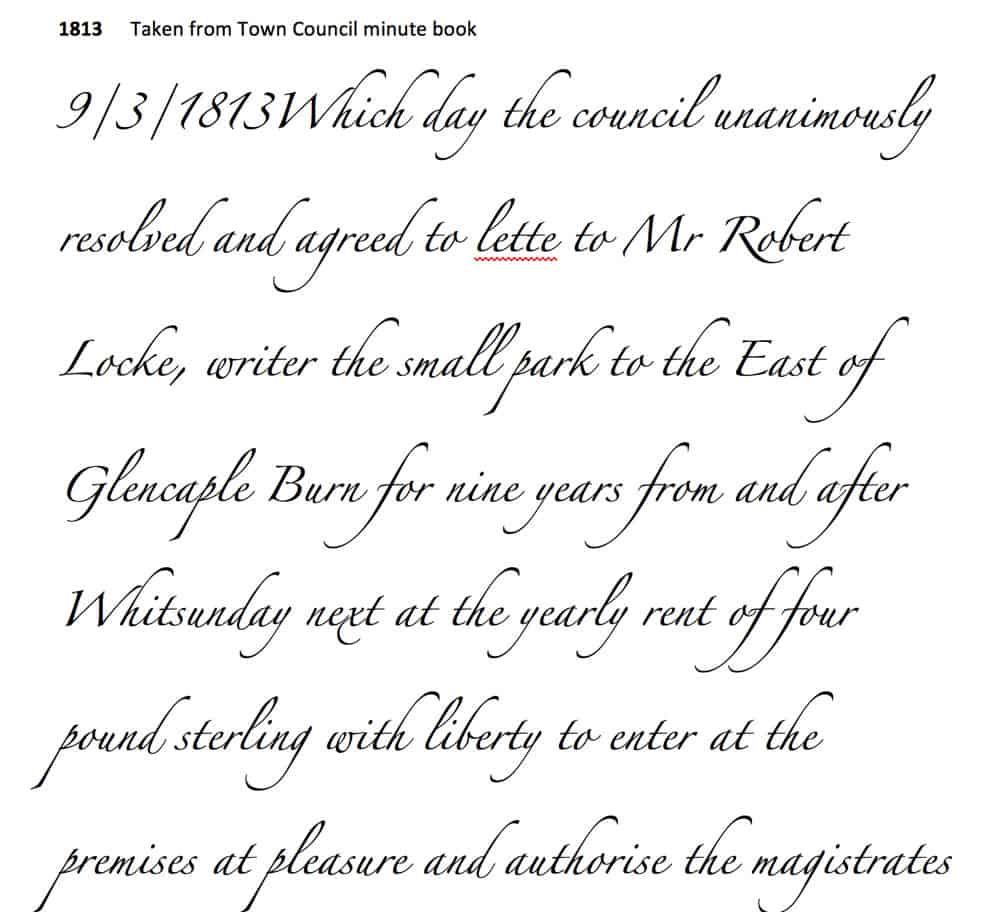
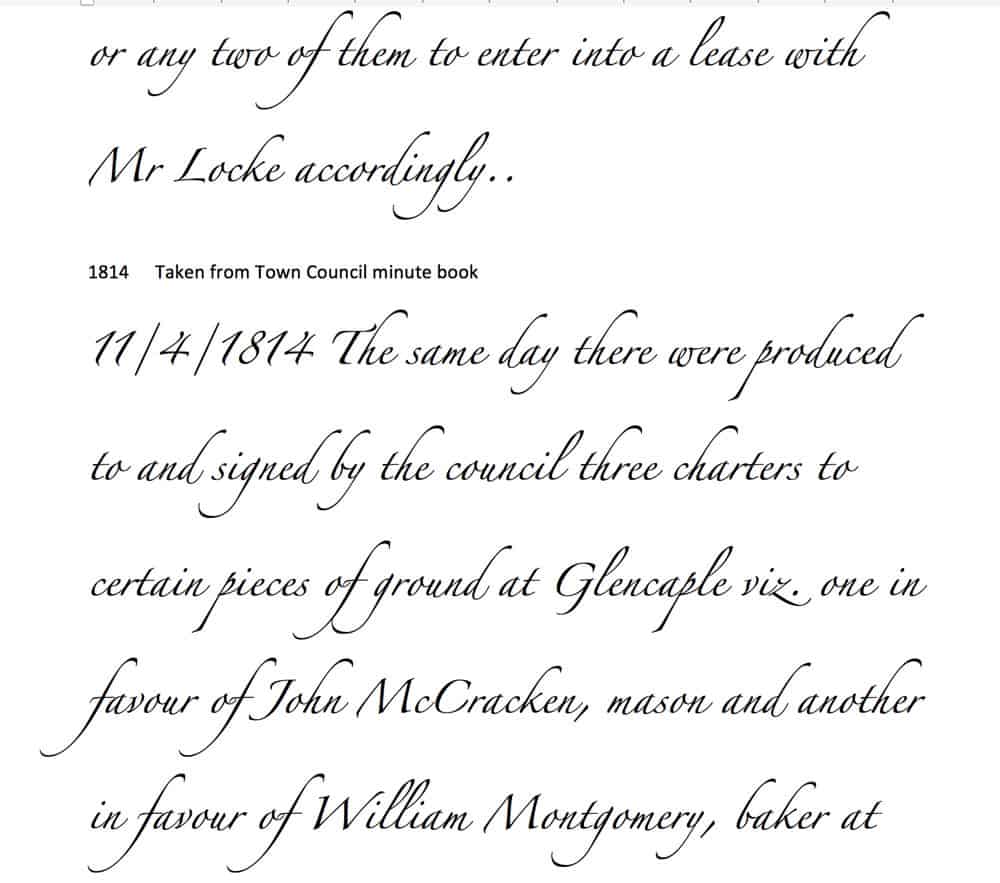
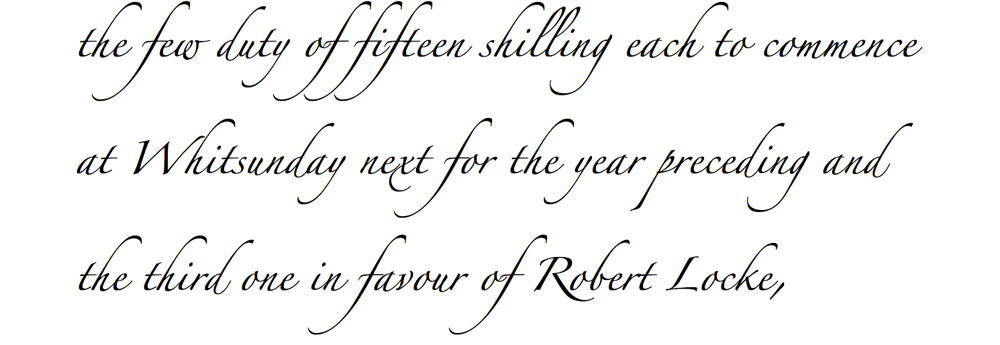
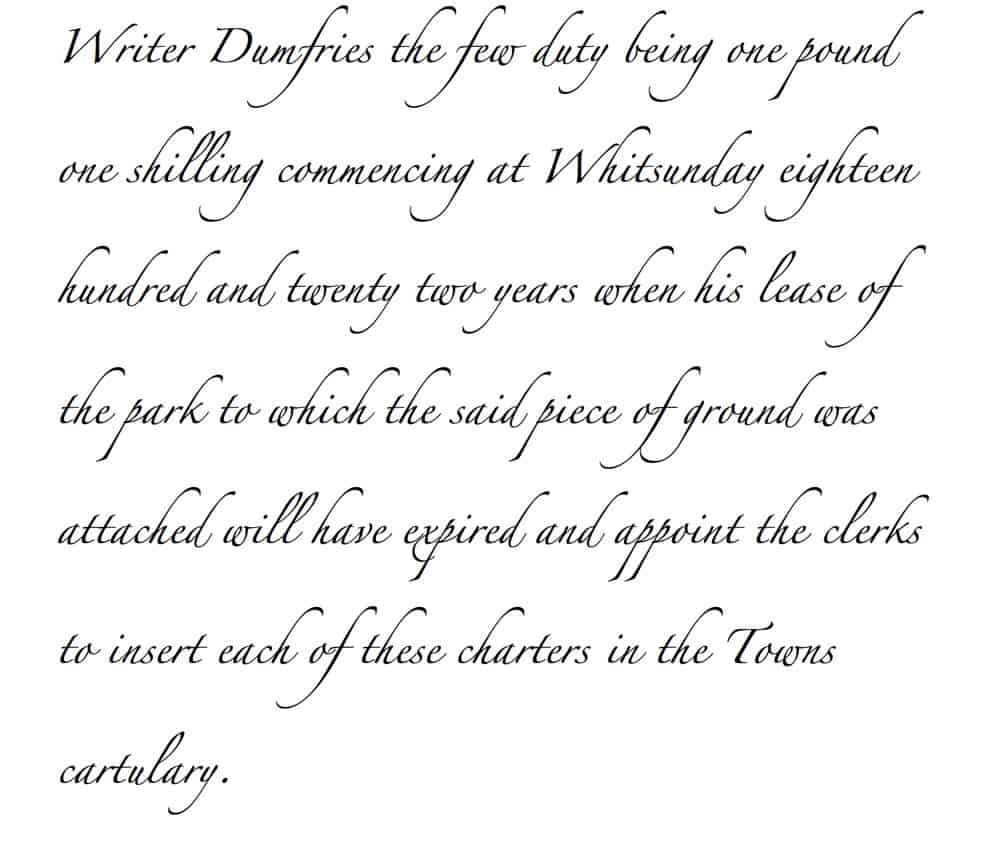
The first deed of the house is dated 19th May 1814 and I found the evidence for it at the Ewart Library where I had found the sessain for that date. I then applied for the deed and found;
‘….and the community of the said burgh to and in favour of the said Robert Locke his heirs or disposes absolutely and irredeemably all and whole that piece of Ground with the dwelling house and offices lately built by him thereon consisting of fifty feet in front of the upper part of that park belonging to the Burgh of Dumfries and Backwards or (unreadable) to M Constable march as lately separated from the remainder of the park by a beech hedge lying in the parish of Caerlaverock and shire of Dumfries bounded by the road leading to Bankend in the north by the property of Marmaduke Constable Maxwell Esquire on the east and south and the remaining part of said park……’
The comment lately built thereon leads me to conclude that if the house was built by 1814 building most likely started in 1813 after renting the land. I have no idea whether Mr Locke lived here at all but he died on 23rd January 1828 by which time he was the Town Clerk of Dumfries. He was buried in St. Michael’s churchyard.
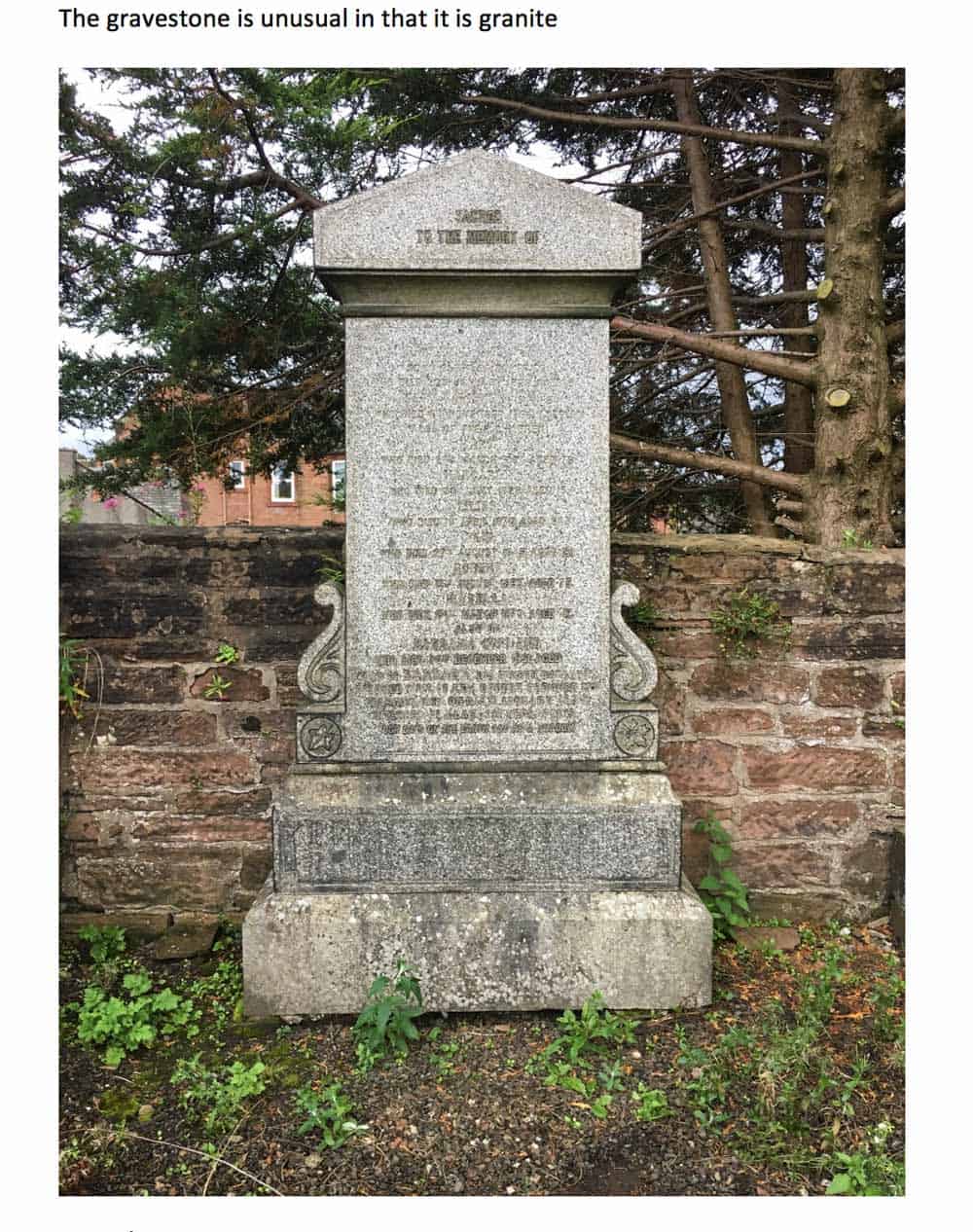
On it the inscription states;
Sacred to the memory of Robert Locke writer town clerk of Dumfries who died 23 January 1828 aged 54.
Mary Copland his wife who died 11 November 1866 aged 81
Also of their children Mary who died 26 March 1887 aged 76
Margaret who dies 20 July 1828 aged 15
Lilias who died 1 April 1870 aged 54
John who died 27 August 1845 aged 28
Robert who died 12 August 1895 aged 75
Isabella who died 24 March 1873 aged 47
Also of Barbara Copland who died 30 December 1851 aged (blank left with no age carved)
Also of Barbara his 4th daughter beloved wife of Rev Robert Bremner MA Glasgow who died 19 January 1895 interred in Glasgow Necropolis
Our days on the earth are as a shadow
There is a sandstone boundary on the grave. On it is carved Robert Locke Town Clerk.
The earliest map of the house is an OS map with no record of a date applied to it but could possibly be 1841. The house can be clearly seen set apart from the others and in two parts indicating the house and offices mentioned previously. Wellington street has been built also by this time.
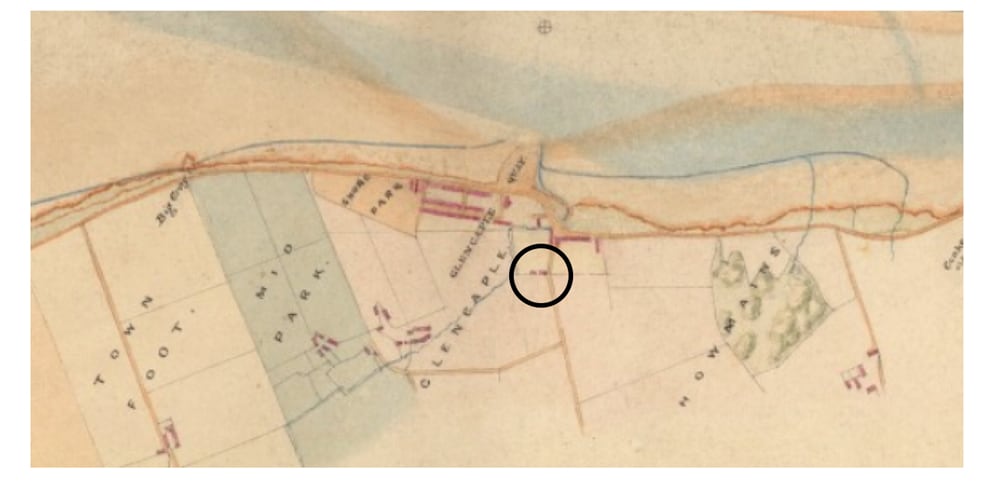
After Robert died his family inherited the house and there are no records of it being sold until 1852 where a Mr John Martin, shipowner, purchased the house as recorded in the sessain of August 19th 1852.
It is possible that the census of 1841 indicates him living in the house with his family and a servant;
John Martin 30
Mary Martin 70
Margaret Martin 35
Elizabeth Martin 25
Isabella Martin 3
James McGowan 25 (Man servant)
They are then apparent in the 1851 census where John is not listed;
Helen Martin Wife 48
Elizabeth Martin 6
Mary Martin 3
Elizabeth Kirk 67
Janet Halliday (servant) 16
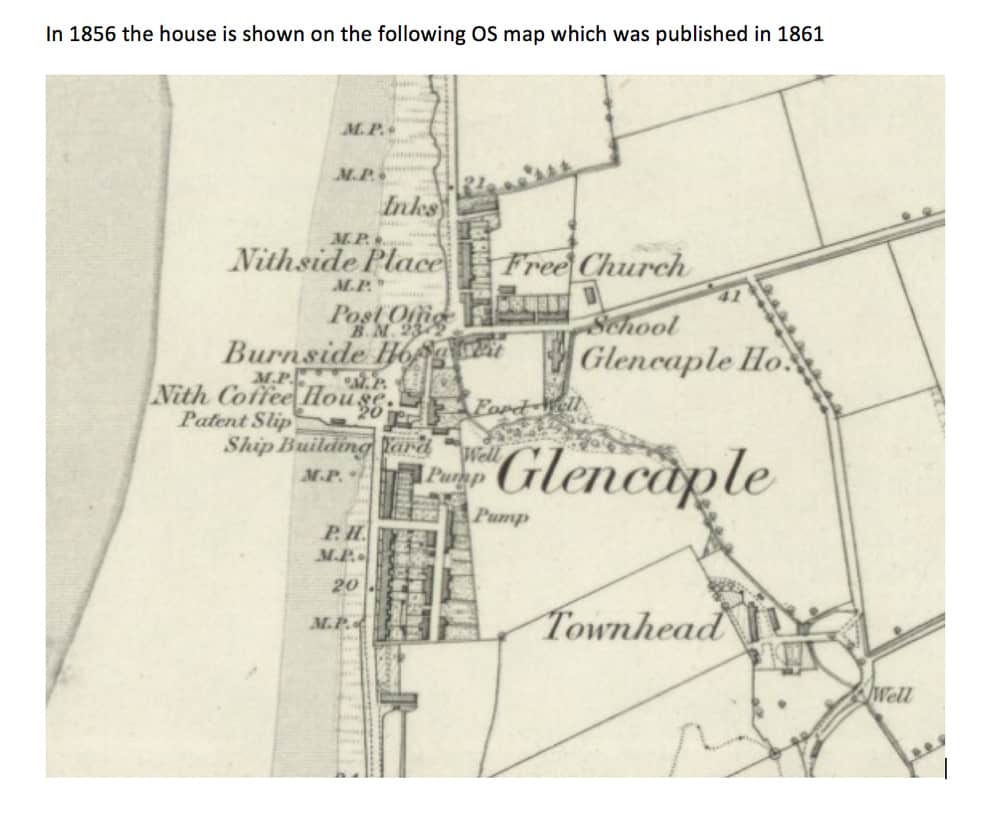
This, for the first time clearly depicts the name of the house and that new extension which was possibly built by the Martin family after acquiring the house. Helen’s mother Elizabeth Kirk died in 1858 in the house.
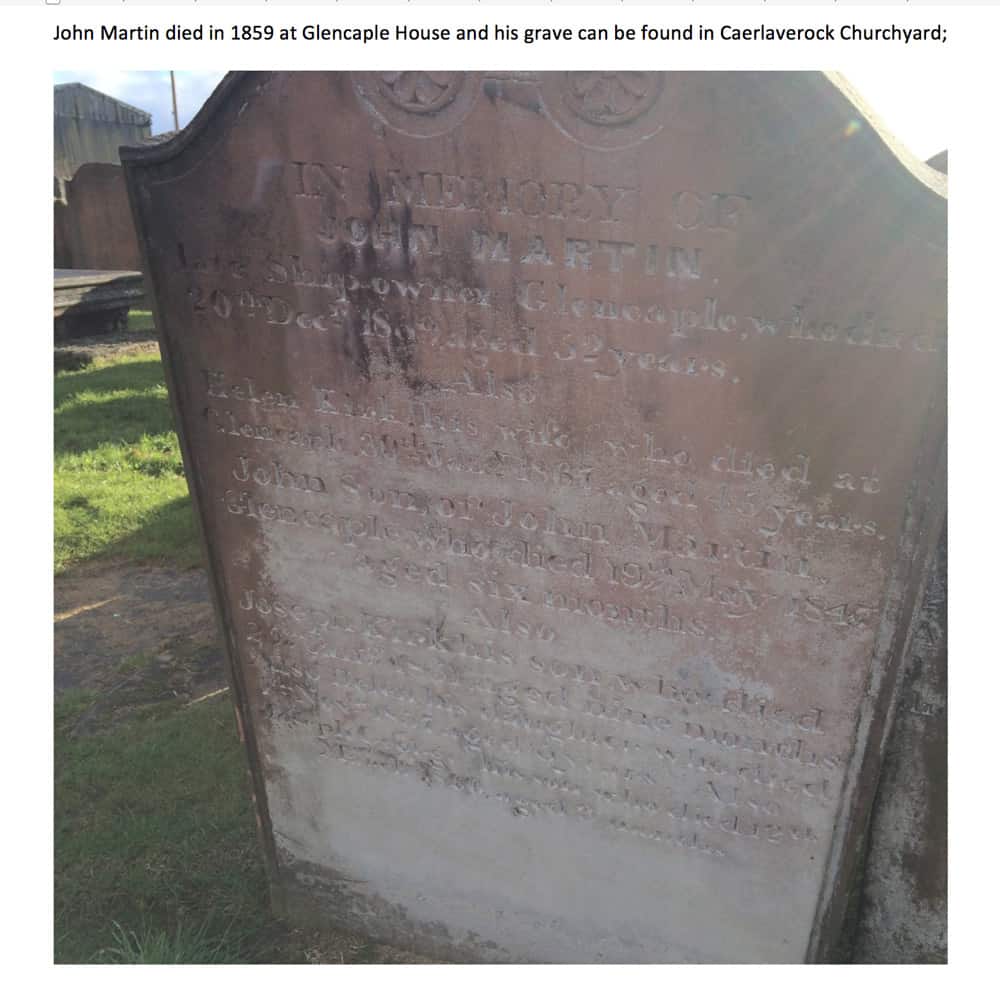
The 1861 census shows his widow now called Helen lives there still with her family. Interestingly this census tells us that John’s ship was the ‘French Golden’.
Helen Martin 38
Elizabeth 16
Mary 13
Phebe 6
John 4
Mary Halliday (servant) 20
In 1867 Helen Martin dies and the next occupier of the house is Samuel Kilpatrick who I believe is renting. He appears in the 1871 census;
Samuel Kilpatrick 62
Rachel Kilpatrick 52
Samuel Kilpatrick 12
Jane Carruthers (servant) 22
By 1876 a William Macduff owned the property but he does not show up on the 1881 census where a servant and his grandson are staying;
John Bryson servant 71
Thomas Bryson 8
John Bryson dies in 1886 in Glencaple. In 1891 William Macduff is living in the house with his housekeeper. He is described as a retired farmer living on private income.
William Macduff 59
Martha Bryson (housekeeper) 76
William dies in Glencaple House in 1897. He is described as single and just over a month later his housekeeper also dies in the house.
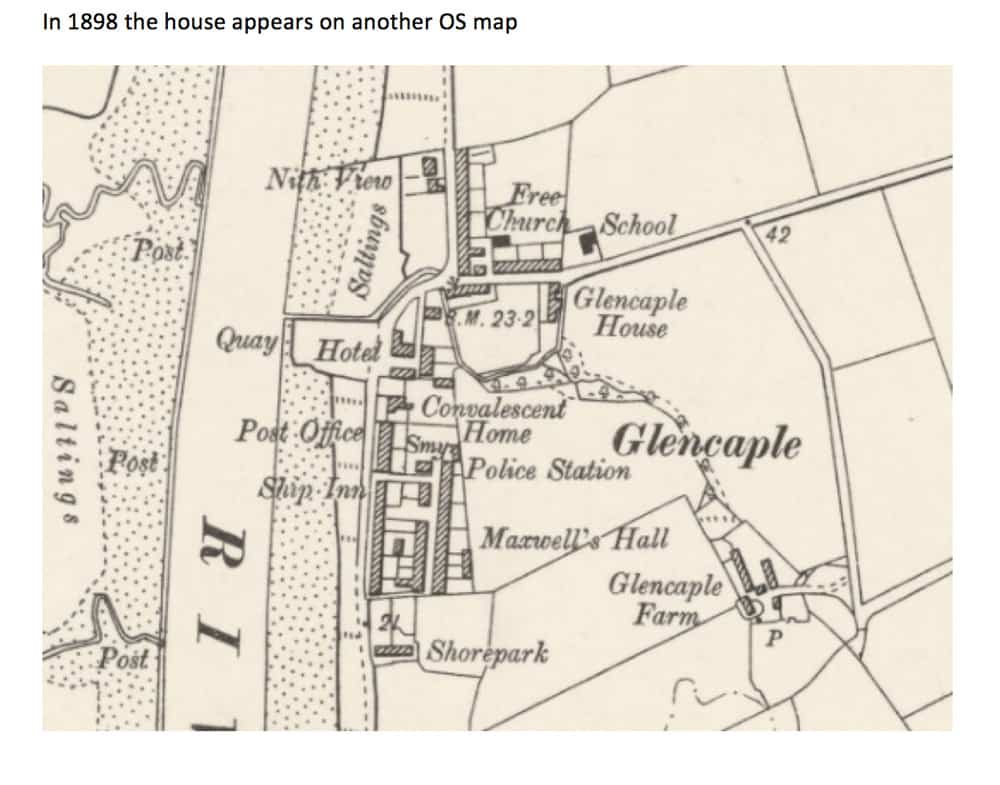
I cannot find the house in the 1901 census nor establish it definitively in the 1905 evaluation.
In the 1911 census the Leckie sisters are living there as House keepers for the Hunter family who now own the house. The postcard below is dated 10th September 1910.
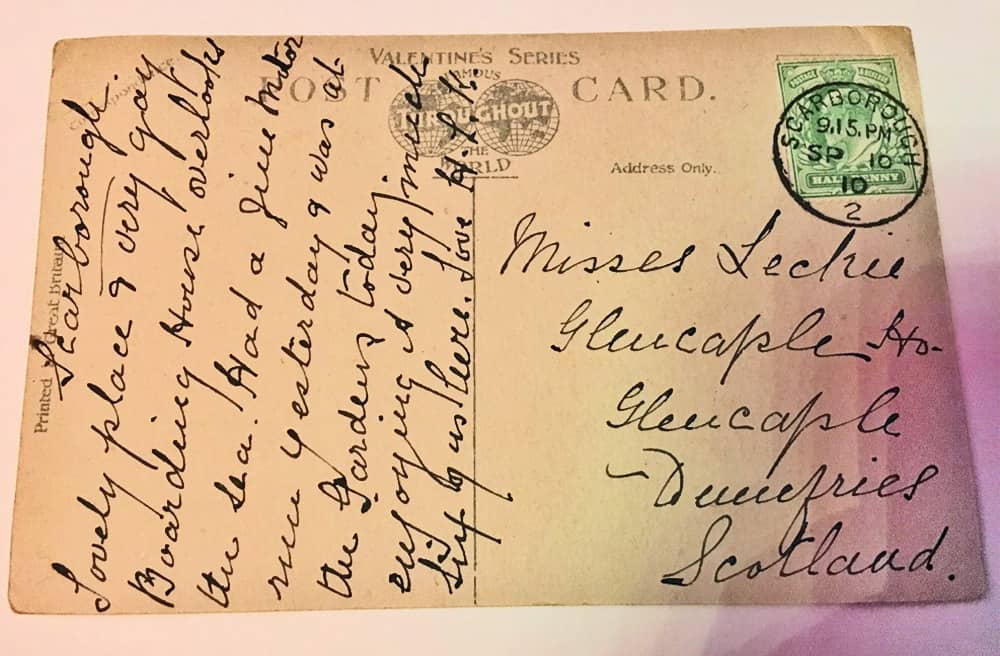
The Leckie’s could be seen living subsequently at Nith View and are listed in 1915 as the proprietrices.
David Hunter certainly owns the house as in 1919 he dies and the house is named in the will. He is also buried in Caerlaverock cemetery;
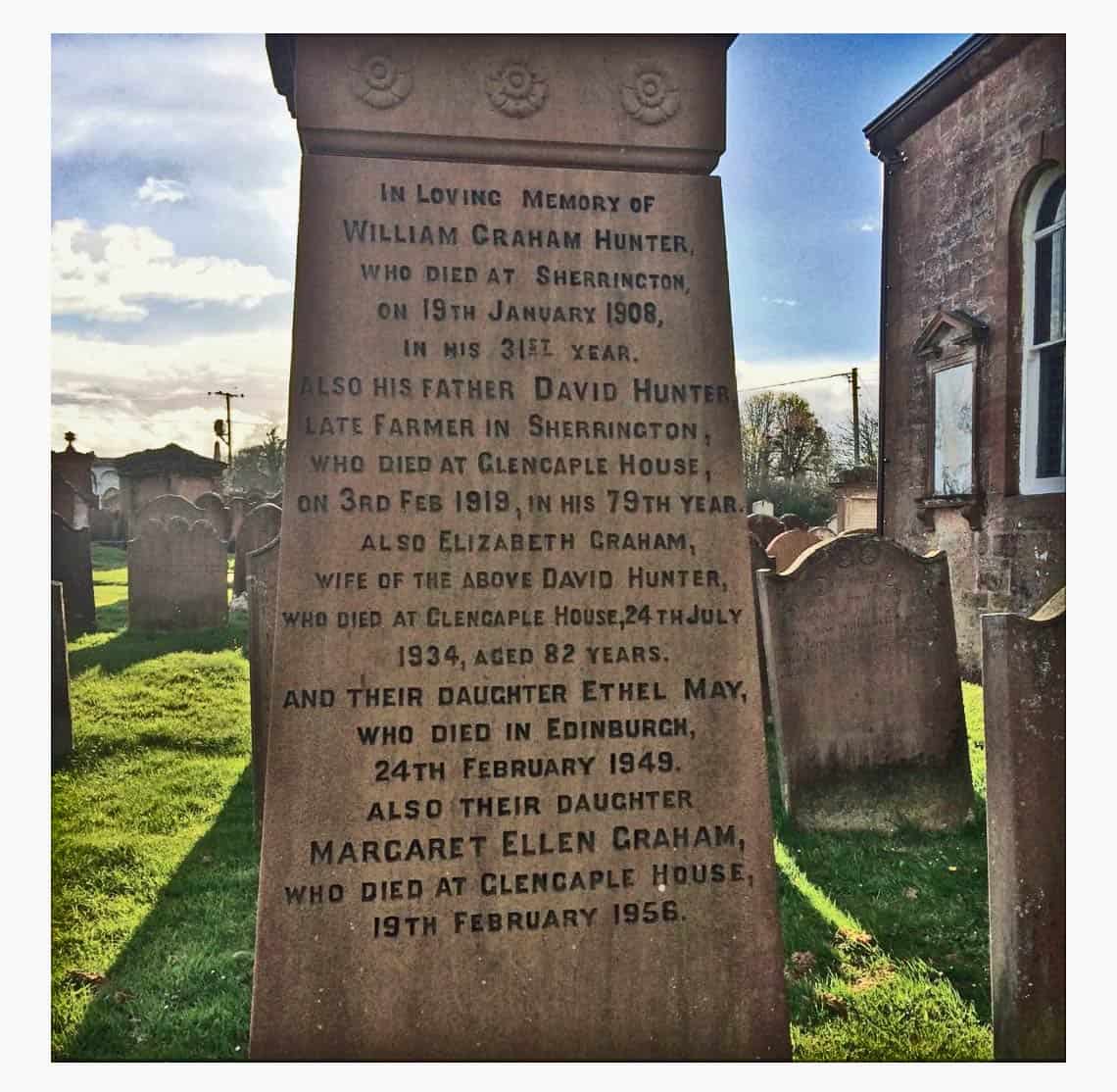
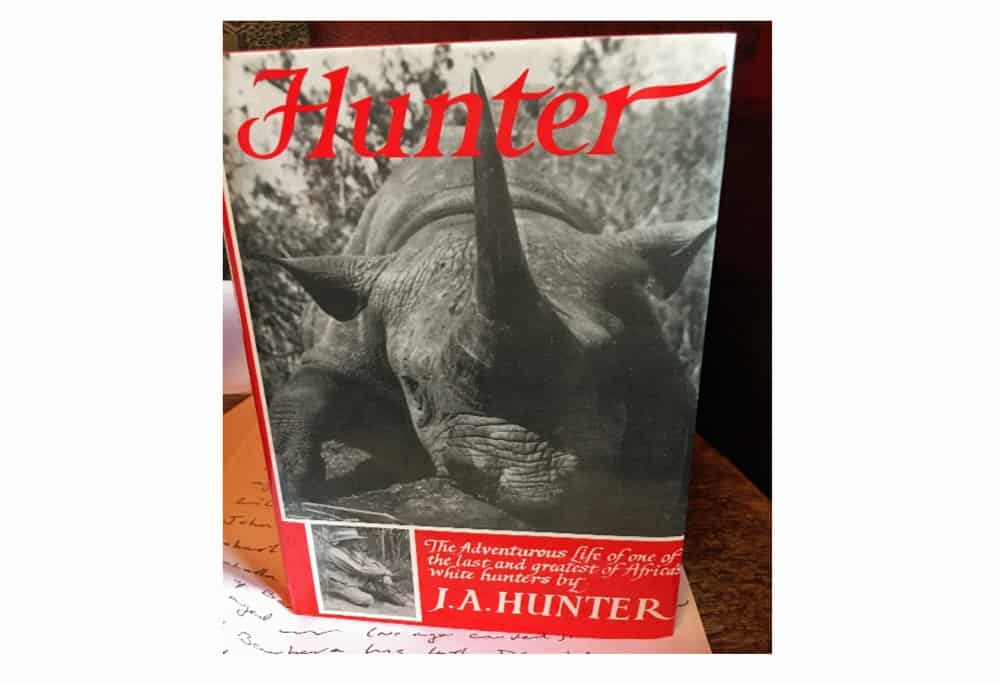
The Hunter family continue to live in the house for a number of years with Elizabeth, his wife, and Margaret, his daughter mentioned as occupiers in the 1925 valuation rolls where the house is valued at £27 12 shillings. Elizabeth dies in 1934 with her daughter dying in 1956. An interesting note to make is that David and Elizabeth had a son who went on to become a big game hunter and wrote a book;
If you have any local information/ research/ stories of Caerlaverock you’d like to share with the community online, please send them to caerlaverockcommunity@gmail.com